
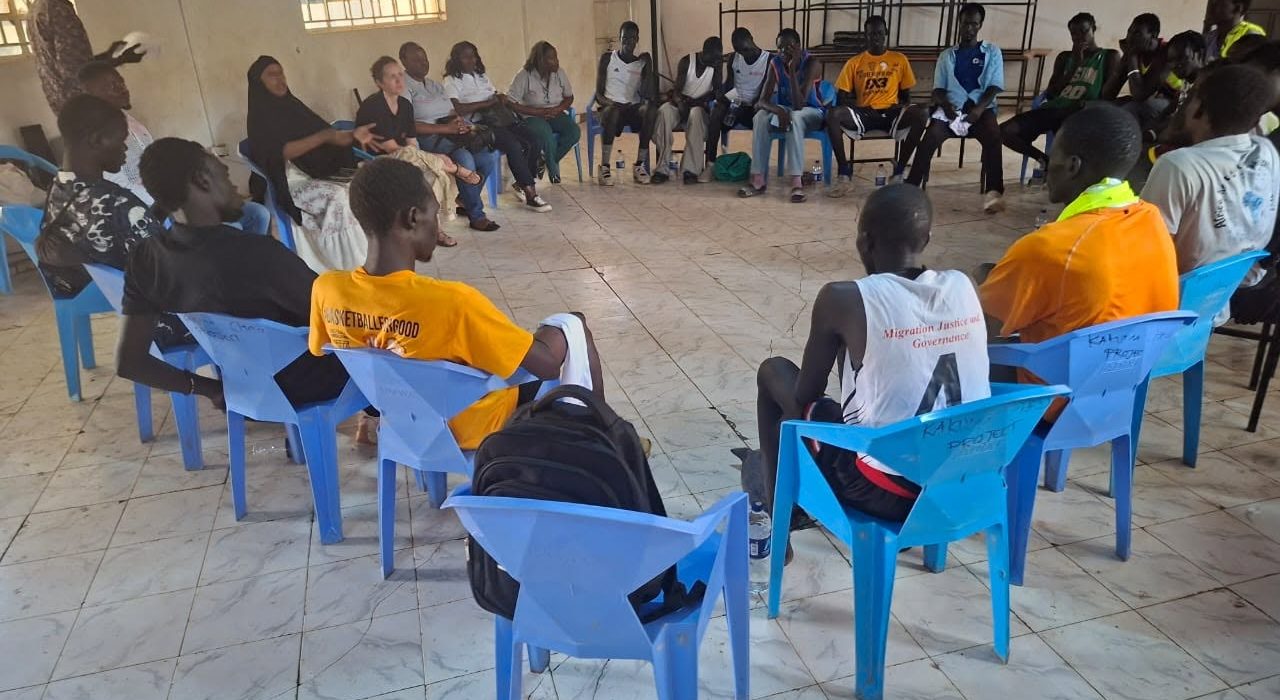
As Eastern Africa moves towards more inclusive refugee policies, one question is becoming increasingly important: what does it take for refugees not only to access work, but to thrive in it? The Refugee Access to Work and Inclusion – Eastern Africa (RAWI-EA) initiative seeks to answer this by bringing together governments, civil society, the private sector and development partners to remove barriers to refugee employment and economic participation. Yet one critical barrier often receives too little attention; mental health and psychosocial wellbeing. If refugees are to rebuild their lives through work, Mental Health and Psychosocial Support Services (MHPSS) must be recognised as an essential pillar of inclusion, not an optional add-on.
For millions of refugees, displacement is more than the loss of a home. It often means losing livelihoods, professional identities, community support systems and hope for the future. While legal reforms and livelihood programmes are expanding opportunities for refugees to work, the psychological impact of displacement can continue to limit their ability to seize those opportunities. Economic inclusion and mental wellbeing are therefore inseparable.
International and national legal frameworks already recognise refugees’ right to work. The 1951 Refugee Convention guarantees access to gainful employment, self-employment and professional practice, while Kenya’s Refugees Act, 2021 provides a legal basis for refugee protection and documentation. The Shirika Plan further seeks to transition refugees from long-term dependency towards self-reliance by integrating them into local economies. These commitments are reinforced by the UN Sustainable Development Goals, particularly SDG 8 on decent work and economic growth, and the International Labour Organization’s vision of decent work that promotes freedom, equity, security and human dignity.
Despite these progressive frameworks, many refugees continue to encounter significant barriers to employment. Restrictions on labour market access, limited recognition of academic and professional qualifications, language barriers, discrimination and inadequate opportunities for skills development continue to hinder meaningful participation in the economy. These challenges are often compounded by unresolved trauma and psychological distress resulting from conflict, displacement and prolonged uncertainty.
Decent work provides much more than an income. It restores dignity, purpose and self-worth. Employment enables refugees to support their families, regain independence, strengthen social connections and contribute positively to their host communities. It can reduce stress, improve resilience and foster a renewed sense of identity after displacement.
Conversely, prolonged unemployment or exclusion from economic opportunities can have profound mental health consequences. Chronic stress, anxiety, depression, hopelessness, social isolation and increased family conflict often accompany prolonged dependency. For refugees already coping with the trauma of forced displacement, these additional pressures can further undermine their wellbeing and reduce their capacity to participate in education, entrepreneurship or employment.
RAWI-EA recognises that improving refugee access to work requires collaboration across multiple sectors. Through its communities of practice, including policy and legal advocacy, employer engagement, public awareness and digital advocacy, coalition mobilisation and Friends of RAWI, the initiative is helping to create a more enabling environment for refugee inclusion. Integrating Mental Health and Psychosocial Support Services across these pillars would significantly strengthen the initiative’s impact by addressing both the visible and invisible barriers to economic participation.
Across the partnership, organisations bring complementary expertise that can support integrated programming. Combining livelihood initiatives with psychosocial support has already demonstrated promising outcomes. Skills training accompanied by group counselling, entrepreneurship programmes incorporating trauma-informed coaching, cash-for-work initiatives linked to psychosocial services, and community savings groups strengthened through peer support all contribute to improved mental wellbeing alongside increased economic participation. These integrated approaches are consistent with the Inter-Agency Standing Committee (IASC) Guidelines on Mental Health and Psychosocial Support in Emergency Settings.
Evidence continues to reinforce this approach. A study by the United Nations High Commissioner for Refugees (UNHCR) highlights the strong connection between employment and refugee mental health, finding that access to work restores purpose, dignity and social connection while reducing anxiety, depression and prolonged dependency. The study also notes that integrating Mental Health and Psychosocial Support Services (MHPSS) into livelihood interventions strengthens both psychosocial recovery and economic outcomes, creating a virtuous cycle in which wellbeing and self-reliance reinforce one another. For more information, see A Data-Driven Look at How Promoting Employment Fosters Refugee Mental Health: https://www.unhcr.org/blogs/a-data-driven-look-at-how-promoting-employment-fosters-refugee-mental-health/.
For governments, employers, humanitarian organisations and development partners, this presents an important policy lesson. Expanding refugee access to work should not focus solely on labour market reforms or skills development. It should also include investments in mental health services that enable refugees to heal, rebuild confidence and sustain productive livelihoods. A refugee who is psychologically supported is more likely to secure employment, remain economically active, contribute to local development and build positive relationships within host communities.
As Eastern Africa advances its vision of refugee inclusion, RAWI-EA has an opportunity to demonstrate regional leadership by championing a holistic model of economic inclusion, one that recognises mental health as a foundation for decent work rather than an afterthought. Integrating MHPSS across refugee employment programmes will not only improve individual wellbeing but also strengthen social cohesion, reduce long-term dependency on humanitarian assistance and contribute to more resilient communities.
Refugees do not simply need jobs; they need the opportunity to recover, regain confidence and realise their full potential. By placing mental health alongside the right to work, RAWI-EA can help shape a future where refugee inclusion is measured not only by employment statistics, but by people’s ability to live with dignity, contribute meaningfully to society and thrive.
By Alice Kwenda, Psycho-Social Counsellor, Kituo Cha Sheria