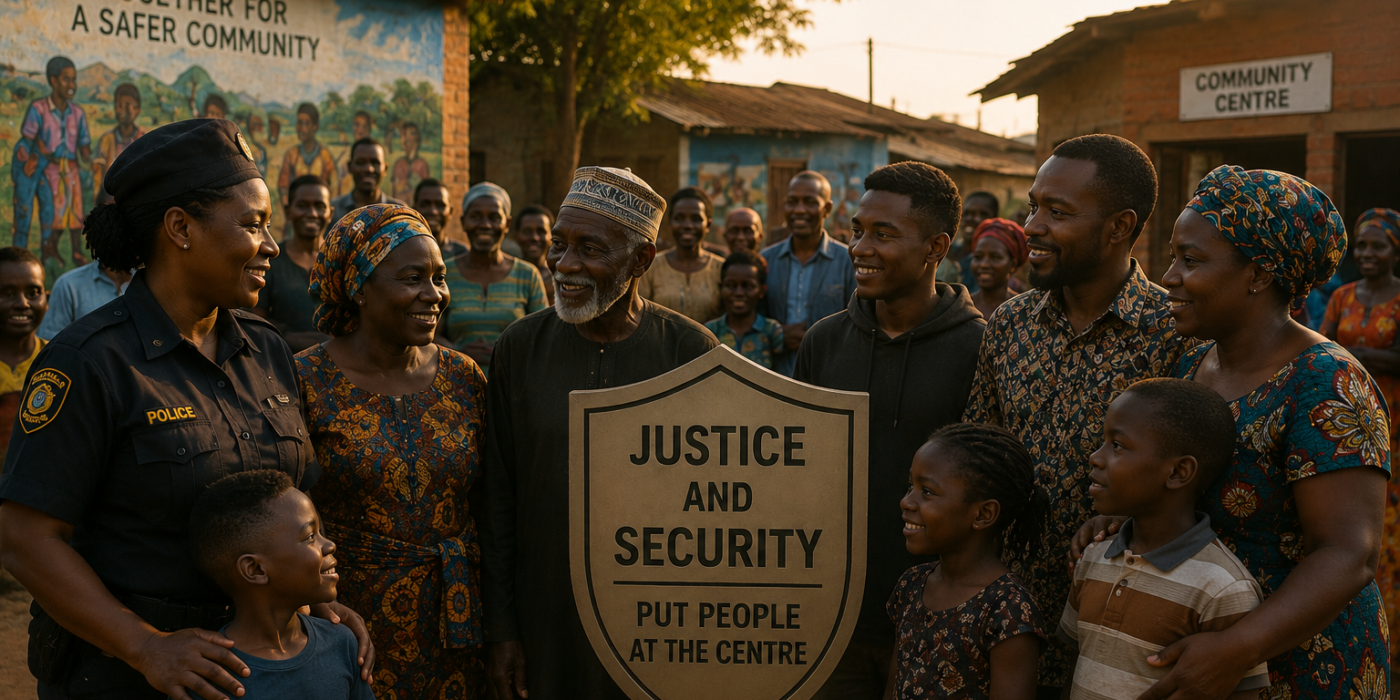
Kituo Joins UNDP Talks on People-Centred Justice

Kituo Cha Sheria took part in a global dialogue on the future of justice systems through the UNDP Frontline Talks on “Justice and Security that Put People at the Centre.”

The organisation’s Executive Director, Dr. Wambua Kituku, joined leading experts, practitioners, and policymakers from across the world in a high-level exchange focused on reimagining how justice and security systems can better serve people. The discussions centred on a shared global priority: moving away from institution-centred approaches and instead advancing justice models that are accessible, inclusive, and responsive to the real needs of communities.

During the talks, Dr. Kituku shared practical insights drawn from Kituo Cha Sheria’s work in promoting access to justice for marginalised and vulnerable groups. He emphasised that justice systems must not only exist in law and policy, but must be felt in everyday life through fair processes, timely responses, and meaningful inclusion of the people they are meant to serve.

The conversation highlighted key strategies for strengthening the rule of law while ensuring that justice remains firmly human-centred and equitable. Participants underscored the importance of collaboration between governments, civil society, and international partners in building systems that are not only efficient, but also trusted and people-driven.

The UNDP Frontline Talks, convened by the United Nations Development Programme (UNDP), continue to serve as a critical global platform for dialogue, knowledge exchange, and collective problem-solving. They bring together diverse stakeholders committed to reimagining justice and security for the 21st century anchored in dignity, inclusion, and fairness for all.

Strengthening institutional integrity to protect Kenya’s civic freedoms

In Kenya, civic space has undergone significant changes, often shaped by the way the state allocates and controls funding. These shifts can influence how civil society organizations operate, at times restricting freedoms and affecting public trust. Understanding these dynamics is essential to ensuring that civic engagement remains meaningful and protected from undue influence.

Strong and independent institutions are essential for creating an environment where rights are respected, accountability is upheld, and citizens can participate freely in governance. By reinforcing institutional integrity, societies can build resilient democracies that are inclusive, transparent, and capable of earning public trust.

Dr. Wambua Kituku, Executive Director of Kituo cha Sheria, addressing participants at the summit.

At the 5th Civil Space Protection Summit held in Nakuru, Kituo cha Sheria Executive Director, Dr. Wambua Kituku, took center stage during the Economics & Institutional Integrity Jam Session, delivering a compelling address on the same theme. Dr. Kituku emphasized that robust, independent institutions are critical to protecting civic freedoms and sustaining public trust noting the critical link between institutional integrity and citizens’ confidence in governance.

 “When institutions operate free from undue influence, they become the backbone of a thriving democracy.” Dr. Wambua Kituku, Executive Director, Kituo cha Sheria

The Annual Civic Space Protection Summit brought together a diverse assembly of delegates from CSOs, NGOs, youth movements, and government agencies under the theme “Reclaiming Civic and Democratic Space Amid Shrinking Freedoms.” The forum provided a critical platform to examine the mounting pressures facing civic freedoms in Kenya, amplify the voices and experiences of human rights defenders, and collectively craft strategies aimed at safeguarding democratic space. It also underscored the urgency of strengthening institutional independence and rebuilding public trust as essential pillars for a vibrant and resilient civic environment.

The Civil Space Protection Summit underway in Nakuru.

Drawing from Kituo’s experience in promoting access to justice and defending human rights, Dr. Kituku underscored that safeguarding civic space requires more than legislation; it demands active enforcement, transparency, and mechanisms that hold institutions accountable. He stressed that independent institutions not only protect individual rights but also foster an environment where civic engagement and public discourse can flourish safely.

The session resonated with participants, reinforcing the idea that economic development, public trust, and civic freedoms are deeply intertwined with institutional integrity. By investing in and protecting independent institutions, societies can ensure that civic space remains vibrant, inclusive, and resilient against encroachments.

Kituo cha Sheria Secures Court Order to Restore Medical Services for Inmates

Kituo cha Sheria filed a constitutional petition challenging the suspension of medical services for persons in lawful custody at Mbagathi Hospital. The suspension risked denying inmates access to essential healthcare, contrary to Article 43 (right to health) and Article 51 (rights of persons in custody) of the Constitution of Kenya. The petition followed Mbagathi Hospital’s decision to suspend treatment for inmates due to an unpaid debt of over KSh 12 million owed by the State Department for Correctional Services.

On 8th September 2025, the High Court at Milimani, presided over by Justice Bahati Mwamuye MBS, issued a conservatory order compelling Mbagathi Hospital to immediately resume admitting and treating inmates referred to it, whether for emergency or non-emergency cases.

The Court also directed the Kenya National Commission on Human Rights and the State Department for Correctional Services to make a substantial payment of not less than KES 10 million within 14 days to settle part of the outstanding debt owed to Mbagathi Hospital.

Justice Mwamuye emphasized that persons in custody retain their fundamental rights and freedoms under the Bill of Rights, except where limitations are compatible with incarceration. He further noted that denial of medical care amounts to cruel, inhuman, and degrading treatment.

Through this petition, Kituo cha Sheria reaffirms its commitment to defending constitutional rights and ensuring dignity and justice for vulnerable groups.

By; Rony Alal

Celebrating Katiba@15: Advancing Constitutionalism and Access to Justice

Kituo cha Sheria proudly joined Kenyans in commemorating 15 years since the promulgation of the Constitution of Kenya, 2010, under the theme “Fidelity to the Constitution; Securing Full Implementation.” Together with our partners, we marked this national milestone at the Methodist Resort with a vibrant celebration graced by former Chief Justice David Maraga, who offered reflections on the country’s progress and the challenges that persist in fully realising the Constitution’s promise.

Chief Justice Emeritus David Maraga delivering his speech during the Katiba Day celebration at the Methodist Church.

As part of our legal empowerment efforts, Kituo also hosted a free Legal Aid Clinic at our grounds, culminating in a colourful ceremony presided over by our Board Chairman, Mr. Justus Munyithya. The clinic provided an accessible platform for citizens seeking guidance on matters ranging from land and succession to labour rights, migration, and criminal justice. In addition, we distributed free copies of the Katiba, reaffirming its central role in protecting human rights and empowering citizens to demand accountability.

“As we celebrate Katiba Day, we are reminded that the Constitution’s promise is only fulfilled when every Kenyan especially the poor and marginalized can access justice with dignity. At Kituo cha Sheria, our mission has always been to stand with those left at the margins, empowering communities to know, claim, and defend their rights. Fidelity to the Constitution means turning its words into lived realities, and we remain committed to ensuring that justice is not a privilege for the few, but a guarantee for all.”  Mr. Justus Munyithya, Board Chair, Kituo Cha Sheria

Kituo cha Sheria Board Chairman, Mr. Justus Munyithya (centre), leading participants in the cake-cutting ceremony.

The Katiba@15 commemoration offered a moment of reflection on Kenya’s strides in deepening constitutionalism, strengthening devolution, and operationalizing the Bill of Rights, while also acknowledging persistent gaps in access to justice, public participation, and governance. It was equally a call to action, reminding all actors that the Constitution is not merely a legal document but a living covenant that must be safeguarded, respected, and fully implemented for the benefit of every Kenyan.

Supported by the Mott Foundation and Misereor, this occasion was both celebratory and reflective, a reminder of our collective journey in advancing constitutionalism and empowering communities to defend their rights. At Kituo, we remain steadfast in our mission to ensure that the promise of the Constitution translates into justice, dignity, and equality for all.

By; Rony Alal

Bridging the Justice Gap: Kituo Cha Sheria Empowers Inmates Through Paralegal Training

In Kenya, countless inmates face a harsh reality: legal problems with nowhere to turn. The judicial process is often prohibitively expensive, lawyers are unaffordable for the majority, and the state frequently fails to provide legal representation. For many, navigating the complexities of the law while behind bars can feel impossible, leaving prisoners vulnerable and their rights unprotected.

It is in this challenging landscape that the critical role of paralegals comes to the fore. Recognizing this gap, Kituo Cha Sheria, with support from the Mott Foundation, has embarked on a series of transformative paralegal trainings across several prisons in Kenya, including Kodiaga Maximum Prison, Chuka Main Prison, Meru Maximum Prison, and Lodwar GK Prison. These trainings aim to equip both inmates and prison officers with essential legal knowledge and practical skills, creating a bridge to justice from within the correctional system.

Inmates display their certificates alongside Kituo board member Hon. Justice P.J. Otieno (in a blue suit) following the successful training in Lodwar, Turkana County.

The sessions cover a broad spectrum of topics, including criminal procedure, the rights of accused persons, fair trial guarantees, legal drafting, and civil law processes as alternative avenues for dispute resolution. Inmates are also sensitized on constitutional rights, with particular attention to the observance of Katiba Day, reinforcing the Constitution’s role in safeguarding rights and promoting justice for all.

Beyond knowledge-sharing, Kituo provides practical resources to support ongoing legal empowerment, including copies of the Constitution of Kenya and the Self-Representation Guide. By equipping inmates with this foundational legal understanding, the trainings foster a more informed and responsible prison community, enabling both inmates and officers to navigate legal procedures effectively and uphold rights.

Kituo staff and correctional officers pose for a photo outside Chuka Prison following the training.

The impact of these sessions has been profound. Legal awareness is strengthened, self-representation is encouraged, and access to justice is expanded for groups often overlooked within the prison system. The Lodwar GK Prison session, graced by Kituo board member Hon. Justice P.J. Otieno, underscored the power of partnerships in driving meaningful social impact.

Through these initiatives, Kituo Cha Sheria continues to empower local actors, advance community-based justice, and ensure that even within correctional facilities, the fundamental rights and responsibilities of every individual are recognized and upheld.

By; Rony Alal

Kituo Cha Sheria Strengthens Access to Justice as Mombasa Launches County AJS Action Plan and Suit

On 21st August 2025, Kituo Cha Sheria, in partnership with the National Steering Committee on the Implementation of Alternative Justice Systems (NaSCI-AJS) and with support from GIZ – German International Cooperation, Kenya, participated in the official launch of the Mombasa County Action Plan on AJS and the AJS Suit, the 11th of its kind in the country.

The launch was hosted by the County Government of Mombasa under the leadership of H.E. Governor Abdulswamad Sheriff Nassir, and graced by high-level leaders including the Chief Justice, Hon. Martha Koome, Hon. Justice (Prof.) Joel Mwaura Ngugi, Chair of NaSCI-AJS, our Executive Director, Dr. Wambua Kituku, and Peter Kiama, Executive Director of Haki Yetu. The event also brought together paralegals, elders, community leaders, and grassroots representatives.

Dr. Wambua Kituku, Executive Director of Kituo Cha Sheria, giving his remarks during the launch of the Mombasa County AJS Action Plan and Suit.

As an institution, Kituo Cha Sheria has been at the forefront of supporting the establishment of AJS Suits, designed to ease the backlog in the Judiciary by leveraging local knowledge and community-based mechanisms for dispute resolution. These Suits offer safe spaces for dialogue, reconciliation, and culturally rooted solutions to disputes—particularly those involving land and family matters that frequently overwhelm the courts.

The newly launched Mombasa AJS Suit will be run by trained paralegals, many of whom have undergone a series of specialized trainings by Kituo Cha Sheria on various elements of the law, community mediation, and the boundaries of AJS practice. These trainings equip paralegals with practical skills to handle disputes in a fair, restorative, and culturally sensitive manner, while also helping them understand the limitations of AJS—for example, that serious criminal matters cannot be handled through community mediation and must be referred to the formal justice system. By anchoring the Suit in the hands of trusted local paralegals, the model ensures both accessibility and compliance with the law.

Hon. Martha Koome, Chief Justice of Kenya, speaking at the official launch of the Mombasa County AJS Action Plan and Suit.

In his remarks, Dr. Wambua Kituku emphasized that “The journey of access to justice does not end with a launch; it continues every day in the lives of the people we serve.” He underscored the fact that the Mombasa AJS Action Plan was developed through collaboration with the Judiciary, county government, elders, and community leaders to ensure it reflects the lived realities of citizens.

Kituo also raised important concerns that need to be addressed as AJS continues to grow in Mombasa and across Kenya. These include the mental wellbeing of AJS practitioners, who often carry the emotional burden of conflict resolution; the need for greater public awareness and trust-building, to enhance confidence in AJS processes; and the localisation of AJS Suits across all six sub-counties of Mombasa, to ensure equity and inclusivity in community-centered justice.

Kituo Cha Sheria Mombasa Office Coordinator, Mr. Conrad Atiang (far left), poses with delegates during the launch of the Mombasa County AJS Action Plan and Suit.

Through support from GIZ and collaboration with partners, Kituo Cha Sheria continues to train paralegals, build the capacity of community mediators, and sensitize citizens to embrace AJS as a restorative, people-centered approach to justice.

The launch marked a historic milestone for Mombasa County, embedding restorative justice within local governance structures and reaffirming the shared commitment of all partners to ensure that justice is accessible, dignified, and harmonious for all, especially the most vulnerable.

By; Rony Alal

A Milestone for Justice in Samburu: Maralal Alternative Justice Centre Officially Commissioned

With the support of the European Union in Kenya and FAO Kenya, Kituo cha Sheria together with the National Steering Committee on the Implementation of the Alternative Justice Systems Policy (NaSCI-AJS) officially commissioned and operationalized an Alternative Justice Centre (AJC) at the Maralal Law Courts in Samburu County on 10th July 2024. This marks a major stride in expanding access to justice, especially for marginalized and remote communities.

The newly commissioned Centre is part of a broader initiative to promote a multiple-door approach to justice, which embraces community-led, restorative, and inclusive mechanisms. By integrating indigenous justice systems and local knowledge into the broader legal framework, the AJC in Maralal will enable the resolution of disputes in ways that are faster, culturally relevant, and more accessible to the local population. It represents a tangible effort to bring justice closer to the people, reflecting the spirit and vision of the AJS Policy.

Hon. Justice Joel Ngugi leads delegates during the commissioning of the Maralal Alternative Justice Centre.

The commissioning event brought together a wide range of stakeholders from the judiciary, civil society, and the local community. Attending the ceremony were Hon. Justice Joel Ngugi, Chairperson of NaSCI-AJS; Hon. Justice Anthony Ndung’u, Presiding Judge of Maralal; Hon. Magistrate Victor Asiyo; Jemimah Aluda; and Kituo cha Sheria’s team led by Executive Director Dr. Wambua Kituku, alongside Esther Nekesa, Jimmy Sayi, Joy Nasike, and Rony Alal. Their presence reaffirmed the collective commitment to advancing people-centered justice in Samburu.

The Judiciary, through NaSCI-AJS Chair Hon. Justice Joel Ngugi, emphasized the importance of AJS both to the Judiciary and the community at large. “Alternative Justice Systems are critical in ensuring that justice is not only accessible but also relatable and timely,” said Justice Ngugi. He further thanked Kituo cha Sheria, and through them, the European Union in Kenya and FAO Kenya, “for their continued support in strengthening access to justice for all.”

Delegates pose for a group photo during the commissioning of the Maralal Alternative Justice System (AJS) Centre.

On his part, Kituo’s Executive Director, Dr. Wambua Kituku, reaffirmed Kituo’s commitment to the cause: “At Kituo cha Sheria, we remain steadfast in promoting access to justice for the poor and the marginalized. We are committed to walking this journey with the communities and our partners, and we pledge our continued support to the AJS movement.”

Also present were members of the Samburu Council of Elders, who serve as trained paralegals and are actively involved in local conflict resolution through AJS mechanisms. Their participation highlighted the critical role that traditional justice actors play in promoting peace and harmony within communities. Representatives from the Court Users Committee also joined the event, reinforcing the importance of multi-stakeholder collaboration in strengthening the justice ecosystem.

As part of the day’s activities, delegates planted trees within the court compound, a symbolic gesture representing justice, growth, and long-term peace in the region. This act not only emphasized the environmental consciousness of the initiative but also reflected a vision for a sustainable and peaceful justice future for Samburu.

Dr. Wambua Kituku, assisted by an officer, plants a tree during the commissioning of the Maralal Alternative Justice Centre.

In addition, Kituo cha Sheria and the NaSCI-AJS delegation also paid a courtesy call on H.E. Gabriel Lenengwesit, Deputy Governor of Samburu County. The meeting served as an opportunity to explore avenues for strategic collaboration in implementing and scaling up Alternative Justice Systems in the region.

This visit reaffirmed the County Government’s support for AJS and its commitment to working closely with local and national stakeholders. It also highlighted the importance of aligning institutional frameworks with community-led efforts to ensure that justice remains inclusive, accessible, and responsive to the unique realities of the Samburu people.

Delegates during the courtesy visit to the Office of the Deputy Governor.

This initiative stands as a powerful reminder that meaningful justice does not only come from formal courtrooms but also grow from the wisdom, practices, and participation of local communities. Samburu now sets a strong example for other counties across Kenya seeking to actualize the promise of the Alternative Justice Systems Policy.

By; Rony Alal

Healing and Empowered: Samir’s Journey from Domestic Violence to Legal Awareness

At just 16 years old, Samir Hussein was thrust into a life she did not choose. Married off as a teenager with little knowledge of her rights, marital abuse, or family planning, she soon found herself overwhelmed by the burdens of motherhood and domestic violence. Over the next few years, Samir gave birth to five children, tragically losing one while enduring increasing neglect and abuse from her husband.

Her situation worsened as she entered her mid-twenties. Her husband, once merely distant, turned violent. He physically abused her, refused to provide for the children, and completely abandoned his responsibilities as a partner and parent. Isolated and emotionally drained, Samir had no idea where to turn until a chance encounter changed everything.

A turning point came when she attended a community legal awareness forum organized by the Kamukunji Justice Centre. There, she met Halima Ibrahim, a paralegal who immediately referred her to Kituo cha Sheria, a legal aid organization that supports vulnerable individuals seeking justice.

At Kituo cha Sheria, Samir received both legal and psychosocial support. She was educated about her rights, given counselling, and assisted in pursuing action through the Alternative Justice System (AJS), a community-led dispute resolution method. Through this intervention, her husband was compelled to take responsibility. Though the couple separated, he agreed to contribute to the children’s education and upkeep.

Kituo’s counselling services also played a key role in Samir’s recovery from years of emotional and psychological trauma. Now mentally stable and rebuilding her life, Samir has become an advocate for other women in her community, helping them understand their rights and access justice.

Samir thanked Kituo cha Sheria for stepping in during her most difficult time. “I am proud that I now know my rights and I can educate others on theirs,” she said. She urged others in abusive relationships to seek help. “To anyone out there suffering in silence, go to Kituo cha Sheria. You will learn your rights, and you can also empower others.”

Her journey underscores the importance of legal empowerment in protecting the rights and dignity of women in vulnerable circumstances. Kituo cha Sheria continues to use community outreach, legal aid, and alternative justice approaches to restore hope and justice for people like Samir across the country.

Watch the story here; https://youtu.be/AKO4OgEmBlw

Story by; Rony Alal

Justice at Last: The Long Road to Victory for Margaret Amango Jumba

In 2017, Margaret Amango Jumba’s life took a painful turn. After seven years of dedicated service as a house help to Ms. Julie Ondeyo, her employment was abruptly and unfairly terminated not through a formal discussion or proper notice, but via a cold and impersonal text message. Ms. Ondeyo had also promised to pay Margaret her terminal dues, a promise she never fulfilled. As for Margaret, this was not just the loss of a job, it was a violation of her dignity and rights.

With nowhere else to turn to, Margaret confided to a friend who told her about Kituo cha Sheria – Legal Advice Centre, a beacon of hope for many workers in Kenya’s informal sector. She visited Kituo’s offices and met the then Legal Officer, Mr. John Mwariri, who listened to her story with empathy and resolve. After thorough screening, Kituo took up her case and immediately sent a demand letter to Ms. Ondeyo. Unfortunately, the letter was ignored. Follow-up efforts were met with silence. When Kituo attempted to serve Ms. Ondeyo personally, she allegedly used her staff to intimidate both Margaret and the organization’s officers.

Determined to seek justice, Kituo cha Sheria filed a case on Margaret’s behalf at the Employment and Labour Relations Court (ELRC), Milimani, under case number ELRC/1001/2017. Despite being duly served and receiving legal notices, Ms. Ondeyo consistently failed to respond or appear in Court.

On 28th February 2024, after years of perseverance, Hon. Justice Dr. Jacob Gakeri delivered a judgment in favor of Margaret Amango Jumba. The court awarded her Kshs. 300,000 for unfair termination and unpaid dues. However, even after this decisive ruling, Ms. Ondeyo refused to accept service of the court judgment and failed to comply with the order.

In response, the court issued a warrant of arrest against her. To enforce the ruling, Kituo cha Sheria hired a private investigator to trace Ms. Ondeyo’s whereabouts and locate her place of work. It was through this intervention that she was finally served. Faced with mounting legal pressure, Ms. Ondeyo eventually complied and made the full payment.

Margaret expressed deep gratitude to Kituo cha Sheria for standing by her throughout the ordeal. She shared that, through this journey, she has been legally empowered and had a better understanding of her rights and the courage to stand up for them. What began as a painful injustice has transformed into a powerful story of resilience and triumph.

This case is not just a personal victory, it is a win for all domestic workers, vulnerable employees, and every Kenyan who believes in the promise of the Constitution and the power of fair labour practices. Margaret’s story is a testament to the importance of accessible legal aid and the relentless pursuit of justice.

Written by; Rony Alal

Unmasking Mental Health: Breaking the Silence, Embracing Authenticity


Every May, the world pauses to observe Mental Health Awareness Month, a vital opportunity to reflect, connect, and take meaningful action on the realities of mental well-being. This year’s theme, “Unmasking Mental Health,” offers a powerful invitation: to remove the layers we often hide behind and speak openly about our emotions, our needs, and our healing journeys. It calls on us to create safe spaces, normalize difficult conversations, and build strong community support systems where no one has to navigate mental health challenges alone.

The idea of unmasking is deeply symbolic. In a world that frequently values productivity over personal well-being, many people are pressured to conceal their pain behind smiles and suffer in silence. To unmask mental health is to bravely acknowledge our inner battles and allow others the same freedom, without fear of stigma or shame. It means embracing our authentic selves not only in private, but also in our homes, schools, workplaces, and communities. True change begins when we recognize that mental health is not an individual burden, but a shared responsibility.

As Mental Health Awareness Month comes to a close, we are faced with a critical question: What lasting impact has it made? Beyond social media posts and organized events, have we seen a meaningful shift in how society understands and addresses mental well-being?

Mental health must not be treated as a seasonal topic or a once-a-year campaign. It deserves a permanent place in our daily conversations and actions. Our minds are with us every day just like our bodies. Mental well-being is essential to how we live, connect, and thrive.

Unmasking mental health means stripping away the silence, fear, and stigma that too often surround it. It means recognizing self-care not as a luxury, but as a necessity. Whether through rest, reflection, meaningful connection, or professional support, we must prioritize what works for people of all ages children, youth, adults, and the elderly so that everyone has the opportunity to attain and sustain good mental health.

One of the most impactful steps we can take is integrating mental health education into school curriculums. From an early age, children should learn that it is okay to talk about their feelings, ask for help, and support one another. Normalizing mental health discussions in education lays the foundation for a generation that is emotionally intelligent, resilient, and compassionate.

But the work cannot end here. As we move beyond the month of May, let us continue to support one another. Let us listen without judgment, speak with kindness, and act with empathy. Together, we can break the silence, dismantle the stigma, and build a society where mental well-being is not only recognized but fully embraced.

As we reflect on Mental Health Awareness Month 2025, one truth stands out: Unmasking Mental Health is more than just a theme it’s a movement. It calls us to move beyond awareness into sustained action. It urges us to advocate for inclusive policies, foster supportive environments, and honor every part of ourselves and others including the parts we’ve been taught to hide.

Kituo Cha Sheria remains steadfast in its commitment to this work. We will continue to speak up, show up, and stand with all those navigating mental health challenges. Together, we can create a society where mental health is no longer masked in silence, but met with understanding, compassion, and transformative change.

To support this journey, we encourage you to explore practical ways of unmasking mental health in everyday life. Watch https://www.youtube.com/watch?v=xnPEK_uqpn0&t=29s and https://www.youtube.com/watch?v=ElVo7_oekSc&t=300s  for insights on creating a supportive, stigma-free environment. These resources remind us that unmasking begins with awareness—but must lead to action.

By Rony Alal