
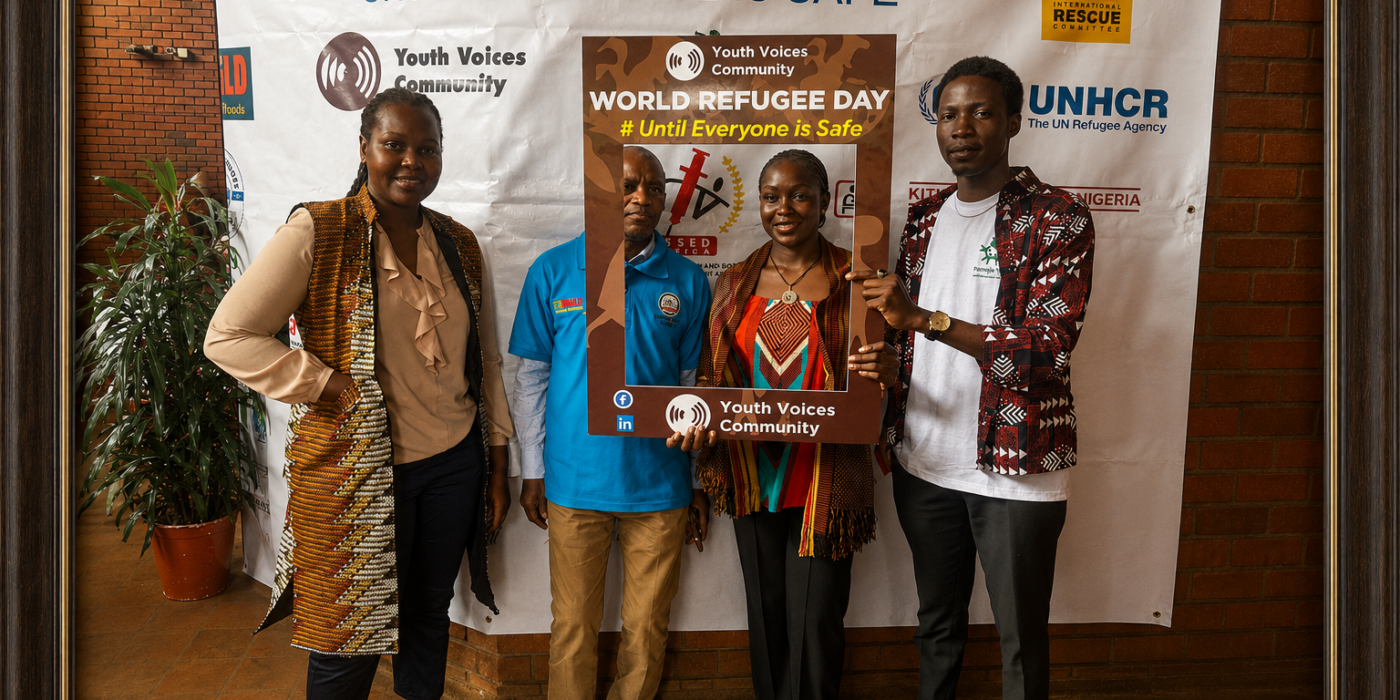
Each year, World Refugee Day gives us an opportunity to reflect on the lives behind one of the most urgent human rights issues of our time. It is a moment to consider the plight of people forced to flee conflict and persecution, the responsibility of host countries, institutions, and communities to ensure that protection is matched by dignity.
For decades, and in the African spirit of “Ubuntu” Kenya has opened its borders to people escaping war, political instability, and humanitarian crises across the region and globally. This history of hospitality is one we should take seriously. It reflects a long-standing commitment to shared humanity and regional solidarity. But it also places before us a difficult question: what does meaningful protection look like when displacement is no longer temporary, but prolonged and, in many cases, intergenerational?
This year’s World Refugee Day theme, “Until everyone is safe,” requires us to confront that question honestly. Safety cannot be understood narrowly as physical escape from danger. Safety also means access to rights, services, to opportunity, and to the legal recognition necessary to live with dignity. A refugee who is protected from immediate harm but denied the ability to work, move freely, access documentation, or build a stable future remains in a state of insecurity.
That is the lived reality for many refugees in Kenya today.
Traditional durable solutions are shrinking by the day. Resettlement opportunities remain limited. Voluntary repatriation is equally untenable for many because conditions in countries of origin are still not conducive for safe, dignified, and sustainable return. Where conflict, political instability, and insecurity persist, return cannot be treated as an immediate or realistic answer.
This leaves many refugees in a prolonged state of waiting-waiting for their countries of origin to become stable, waiting for resettlement opportunities, or waiting to be integrated into their host countries. Yet none of these options seem to be certain.
At the same time, the humanitarian response is changing. Under differentiated assistance models, food and basic support are increasingly being targeted at the most vulnerable. That may reflect funding pressures and operational realities, but it also raises an urgent policy question: what happens to the many refugees who will receive reduced assistance or no basic assistance at all, yet administrative barriers to self-reliance still persist? If support is shrinking, then the legal and administrative barriers to self-reliance must also be reduced.
This means recognising that people who are expected to meet more of their own needs must also be given a fair opportunity to do so. A system that reduces assistance while maintaining barriers to livelihoods only deepens hardship and is likely to lead to compounded humanitarian crises.
Kenya has already begun important conversations on refugee inclusion, and those efforts should continue with greater urgency. The longer displacement lasts, the less sense it makes to rely on frameworks designed for short-term emergencies. Refugees are already part of Kenya’s social and economic fabric. They contribute to local economies, support households, and participate in community life in ways that are too often ignored in public debate.
When refugees are denied pathways to self-reliance, the result is dependency, frustration, and lost human potential. By contrast, when people have the legal space to work, study, move, and organise their lives, they are better able to contribute meaningfully to the communities around them. Kenya has already taken important steps in this direction. Its legal and policy framework has continued to evolve, and there is growing recognition that refugee protection must include social and economic inclusion. That shift is important. But progress on paper must translate into progress in daily life. Rights must be felt in refugee camps, in urban settlements, in schools, in places of work, in public offices, and in every other space where refugees interact with the State and society.
Legal recognition means little if a person cannot enforce their rights, challenge unlawful treatment, or navigate the systems that govern their daily life. Any serious conversation about reform must place refugee voices at the centre. Refugee-Led Organizations bring knowledge that no outside actor can replicate. They understand the barriers because they live them. They understand what works because they have had to navigate systems that were not built with them in mind. Policy design, legal reform, and implementation efforts will be stronger, more legitimate, and more effective when refugees are recognised as leaders in shaping the solutions that affect their lives.
World Refugee Day should therefore be a point of accountability that pushes all of us, government, civil society, development actors, and the public to ask whether our laws, institutions, and attitudes reflect the reality of prolonged displacement and the demands of human dignity.
For Kenya, the challenge is to ensure that protection is meaningful. A system that keeps people safe from immediate harm but trapped in indefinite uncertainty cannot be the endpoint of our response. Refugees need safety. But they also need recognition, opportunity, and a fair chance to build a life.
That is the work ahead. On this World Refugee Day, we recommit ourselves and say: until everyone is safe, our obligation is to shelter, to uphold dignity, expand inclusion, and ensure access to justice.