
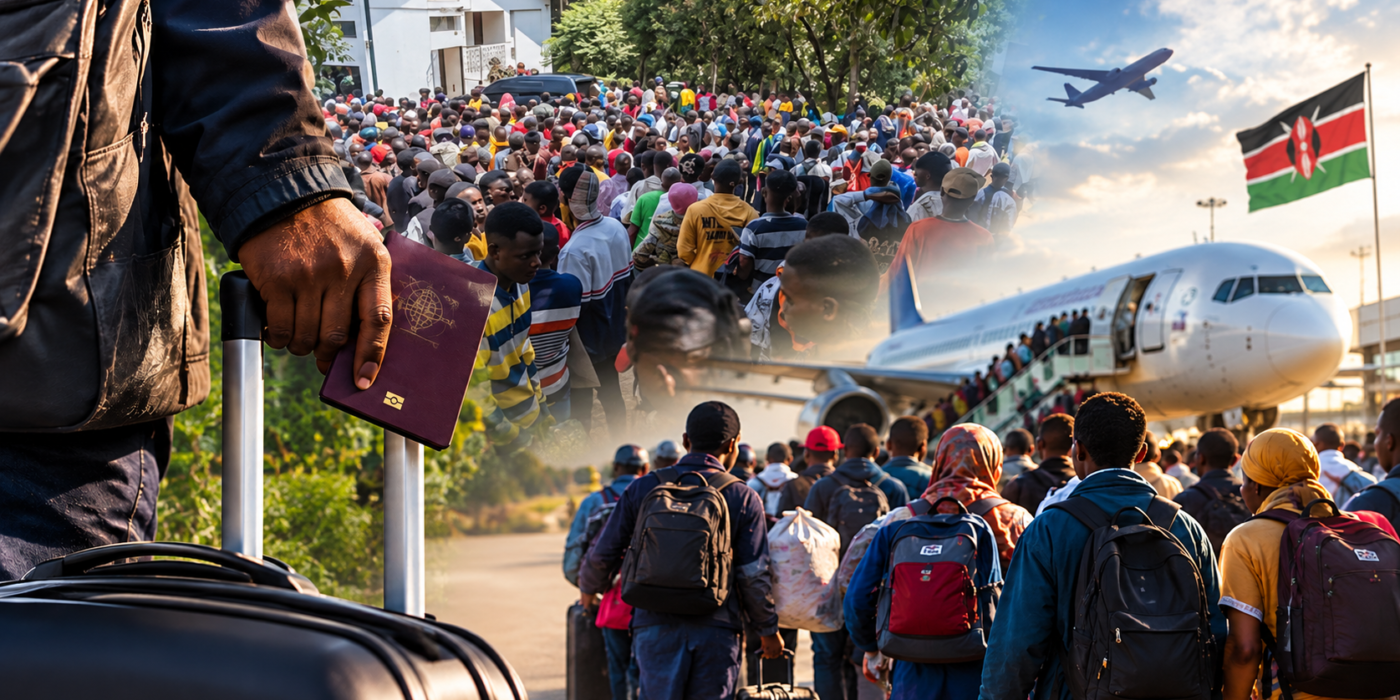
The Government’s recent directive targeting foreign nationals engaged in small-scale businesses has raised significant questions about the protection of refugees, asylum seekers and other vulnerable migrants living and working in Kenya.
The controversy began on 2 September 2026 when President William Ruto directed the Government to begin enforcement action against foreigners operating small businesses and engaging in hawking and other small-scale trade. The President said the measures were intended to protect Kenyan traders from unfair competition and directed that enforcement begin the following week. The announcement immediately generated concern among refugee and migrant communities, particularly because many refugees depend on small businesses and self-employment as sources of livelihood.
On 4 September, Kituo Cha Sheria joined 12 other civil society organisations in issuing a joint statement raising concern over the directive and its potential implications for refugees and asylum seekers. The statement warned that indiscriminate implementation could expose vulnerable populations to arbitrary arrest, harassment, extortion, confiscation of property, forced closure of businesses and community violence.
The joint statement pointed to Article 27 of the Constitution, which guarantees equality and equal protection of the law, as well as Articles 28, 29 and 40, which protect dignity, security of the person and property rights. It further cited the Refugees Act, 2021, which provides refugees with the right to engage in gainful employment and business subject to applicable laws. The Act also protects asylum seekers’ right to remain in Kenya while their refugee status is being determined. These protections are particularly important for refugees whose livelihoods depend on economic self-reliance.
Kenya has in recent years pursued policies aimed at moving refugee management beyond humanitarian assistance towards socioeconomic inclusion. The Government’s Shirika Plan, launched in 2025, seeks to integrate refugees into national and county development systems while promoting self-reliance and economic participation. The joint statement noted that the new directive risks undermining these efforts and Kenya’s commitments under the 2023 Global Refugee Forum.
For Kituo Cha Sheria, the directive is closely linked to its longstanding work to protect the rights and livelihoods of refugees and asylum seekers through legal assistance, strategic litigation and policy advocacy. Kituo is involved in High Court Petition No. HCCHR E554/2025, alongside refugee legal networks, the Kenya National Commission on Human Rights, the Refugee Consortium of Kenya and other civil society organisations, challenging barriers that refugees face in accessing lawful employment and livelihoods, including burdensome Class M work permit requirements. The case raises a broader question of how Kenya can regulate employment, business and immigration while upholding rights guaranteed to refugees under national and international law.
While the Government has a legitimate mandate to regulate immigration, trade and business, such measures must remain consistent with the Constitution, the Refugees Act and Kenya’s regional and international obligations. Kenya’s immigration framework provides for a Class M permit for refugees seeking to work or engage in trade or business, underscoring the distinction between lawful regulation and blanket exclusion. The Kenya National Commission on Human Rights has similarly called for enforcement involving foreign nationals to be lawful, fair, consistent and non-discriminatory, following petitions from refugee and migrant communities reporting threats, intimidation, discriminatory treatment and online attacks.
Under the 1951 Refugee Convention, Articles 17 and 18 recognise refugees’ rights to participate in lawful economic activity, including wage-earning employment and self-employment in areas such as agriculture, industry, handicrafts and commerce, subject to the applicable legal framework. Kenya is also a State Party to the 1969 OAU Convention Governing the Specific Aspects of Refugee Problems in Africa, which forms part of the international legal framework for refugee protection in the country.
For Kituo, access to justice is not limited to representation after a violation has occurred. It also involves ensuring that refugees and asylum seekers understand their rights, can access lawful remedies and are able to participate in decisions and legal processes that affect their livelihoods and security. Forcing refugees to abandon their livelihoods without regard to their legal status could push already vulnerable communities into destitution and increase their exposure to exploitation and other forms of harm.
As Kenya continues to balance the protection of local economic opportunities with its obligations to refugees, migrants and regional integration, the unfolding issue highlights the role of law and legal empowerment in ensuring that regulation does not come at the expense of protected rights.
By: Rony Alal